
The Comeback of the Humpback Whale
Humpback whales are extraordinary. That much is undeniable. They never fail to leave you in jaw dropping awe, whether they are launching their 30 tonne bodies into the air like torpedoes or gliding beneath the surface with astonishing grace.
But the history of humpbacks hasn’t always been a smooth one. Humpbacks were once hunted to near extinction, with only around 10,000 left by the early 1990s. However, thanks to an incredible global effort, the International Whaling Commission banned commercial humpback whaling in 1966 and things have been looking up ever since. Global humpback populations are now estimated to be over 100,000 whales and rising! To celebrate this conservation success story, here are some humpback fun facts.
They sing love songs
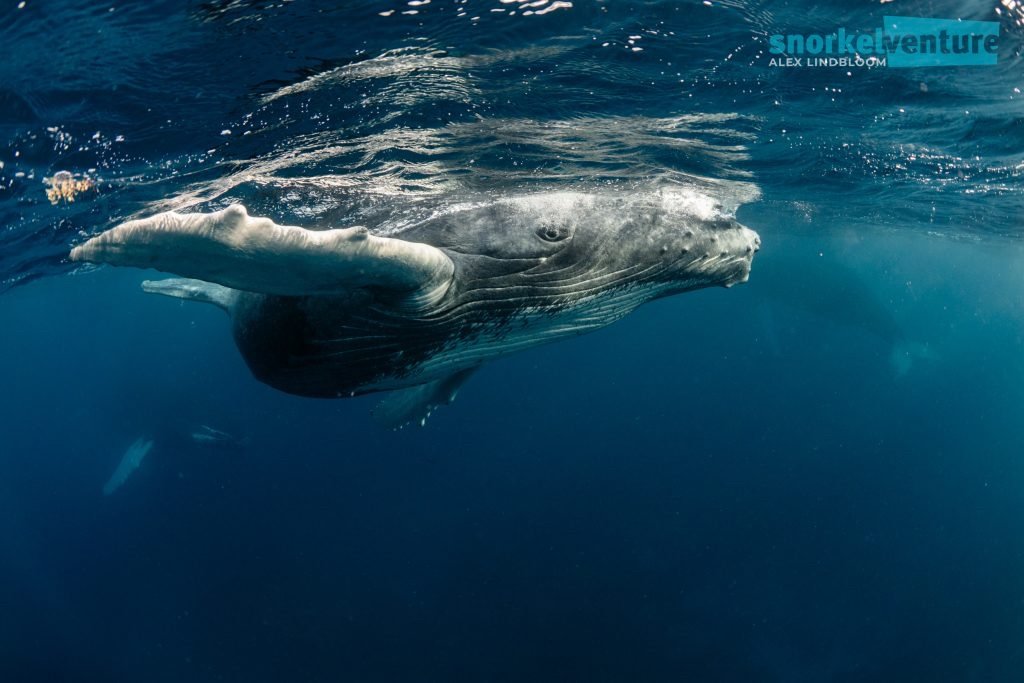
During mating season, male humpbacks sing to attract females. This is not your average “pick your favourite tune and belt it out” karaoke contest. It is a wonderful example of cultural transmission. Much like human trends, humpback songs evolve. Each breeding season introduces a new musical “hit,” shaped by the subtle changes males make during the preceding feeding season: tweaks in rhythm, phrases, or melodies. By the time they migrate to warmer mating waters, a fresh, complex song has been written. As they travel, males cross paths and learn the song from one another. The song is passed on from West to East, spanning thousands of miles across the ocean. One rendition can last up to hours at a time.
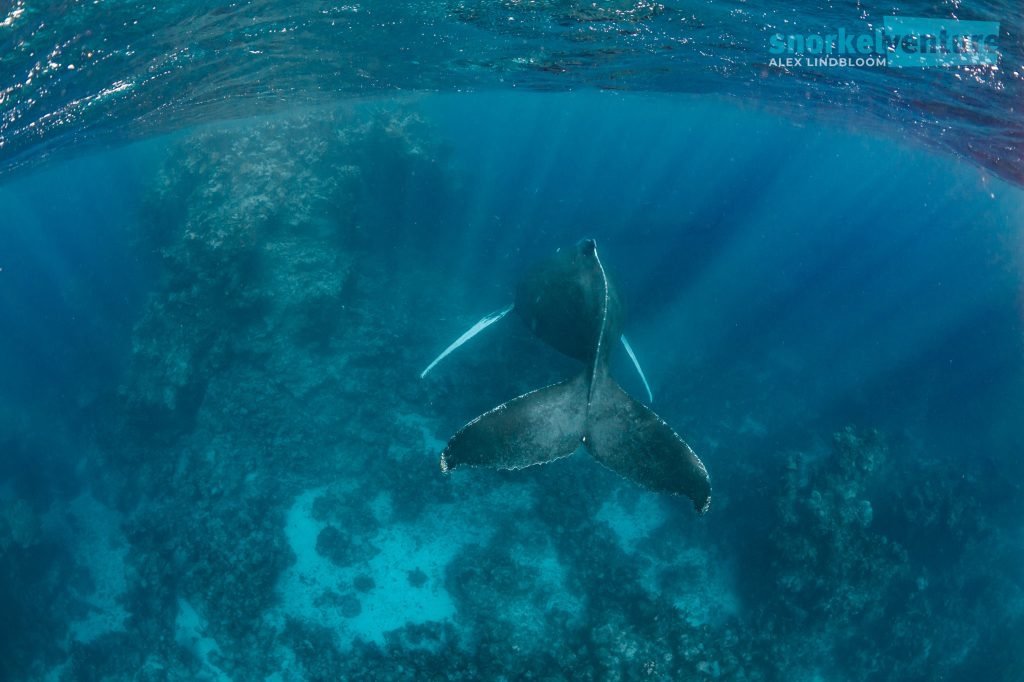
In the Cook Islands, humpbacks have even been observed swimming into shallow reefs, positioning themselves vertically with their heads among the coral. The reef acts like a natural amphitheatre, amplifying their songs for miles. With any luck, making the nearby females swoon with admiration.
What's up with all the splashing?
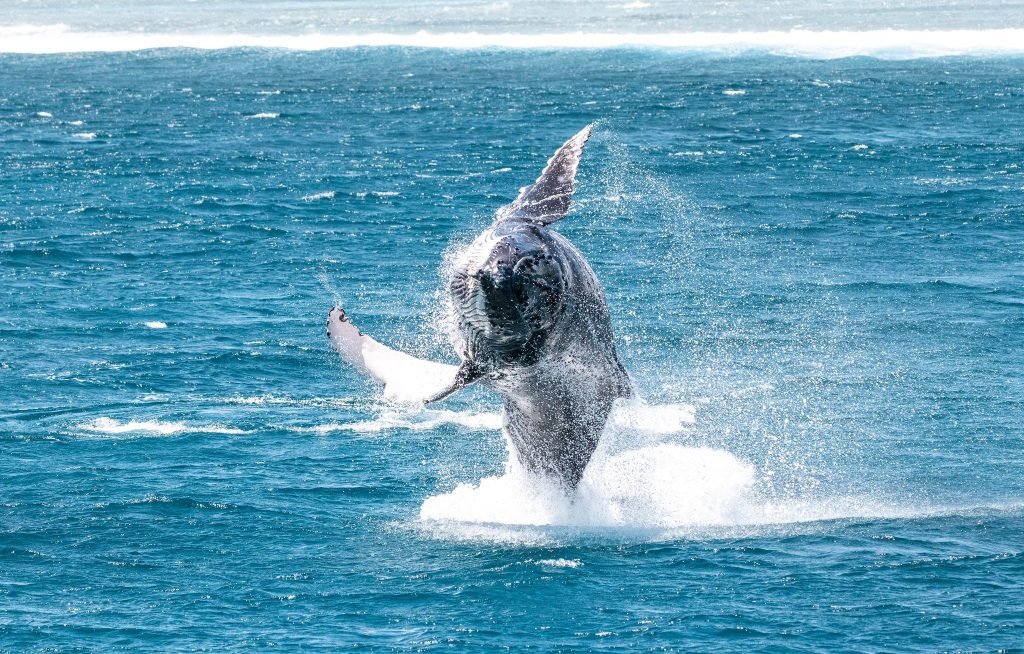
Humpbacks are famous for their aqua aerobics. They slap their tails, wave their fins, and hurl their entire bodies out of the water before landing with a huge echoing wack. As with most animal behaviour, we can only speculate as to why they do what they do. But for a 16-metre whale to launch itself completely out of the water takes an enormous amount of energy, so there must be a good reason behind these dramatic displays…or are they simply having the time of their lives?
One theory is that the whales are communicating. When their body hits the water the sound it makes travels for miles. This is a fast way to communicate, a food source, location or danger to nearby whales. Another speculation is that the whales are jumping to remove growths from their skin. Humpbacks can't simply scratch off that irritating barnacle growing on their side, so it is thought that they jump to remove parasites.
Snorkeling with humpbacks should be on everyone's bucket list. After spending time in the water with humpbacks, it is impossible to ignore their distinct personalities. And while I risk a little anthropomorphism here, humpbacks appear to express a spectrum of emotions not unlike our own, one of which is joy! This is unmistakable when watching a humpback calf splashing about. Much like human babies, they play, explore, and revel in discovering their new world. In fact, humpback calves have been observed leaping out of the water as many as 40 times in a row, quite literally jumping for joy.
Where, when, and what do they eat?
Humpbacks are what you might call yo-yo dieters. During summer, they migrate toward the poles, where they feast and fatten up for the winter months. As members of the baleen whale group, they use their baleen plates like giant sieves, filtering enormous volumes of water to catch tiny prey. In the Southern Hemisphere, they primarily feed on krill; in the Northern Hemisphere, they prefer herring. A single humpback can consume up to 5,000 pounds of krill a day, gaining body mass at an astonishing rate, sometimes more than 12 pounds an hour. All of this is to build the energy reserves needed for their annual migration.
When mating season arrives, humpbacks head toward the equator, where warmer waters await. During this epic 10,000 mile round trip, the whales fast. Focusing entirely on mating, giving birth, and caring for their young, there is no time to eat. On the return journey to their feeding grounds, mothers nurse their newborn calves, providing up to 150 gallons of energy rich milk each day while also protecting them and teaching them the ways of the ocean. So, once the mothers and calves finally reach the feeding grounds, they are famished and ready to once again feast and fatten up for winter.
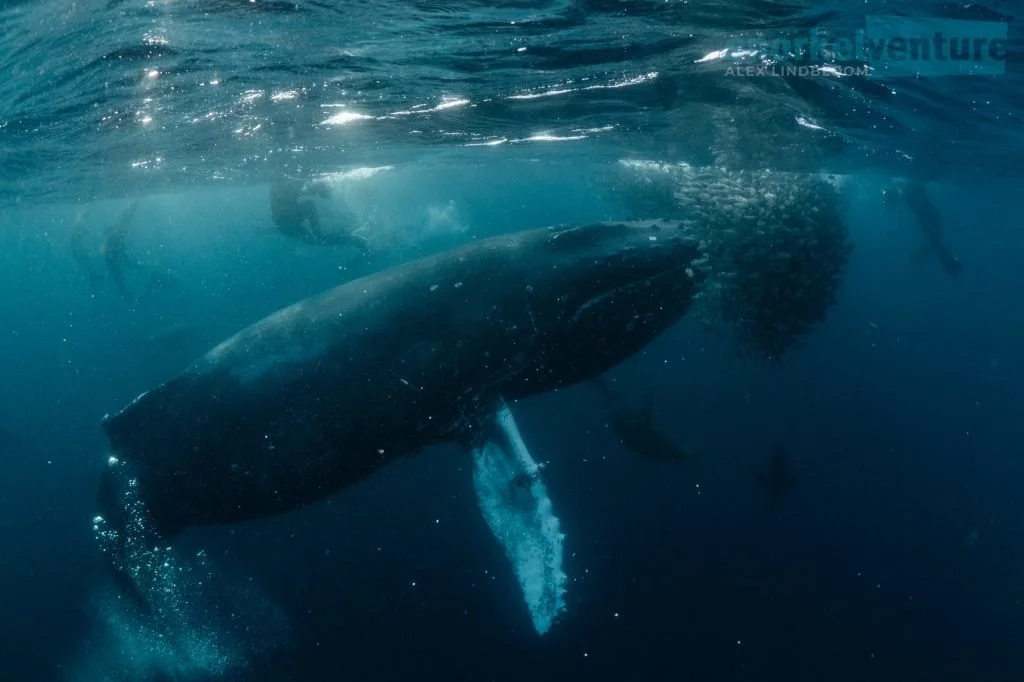
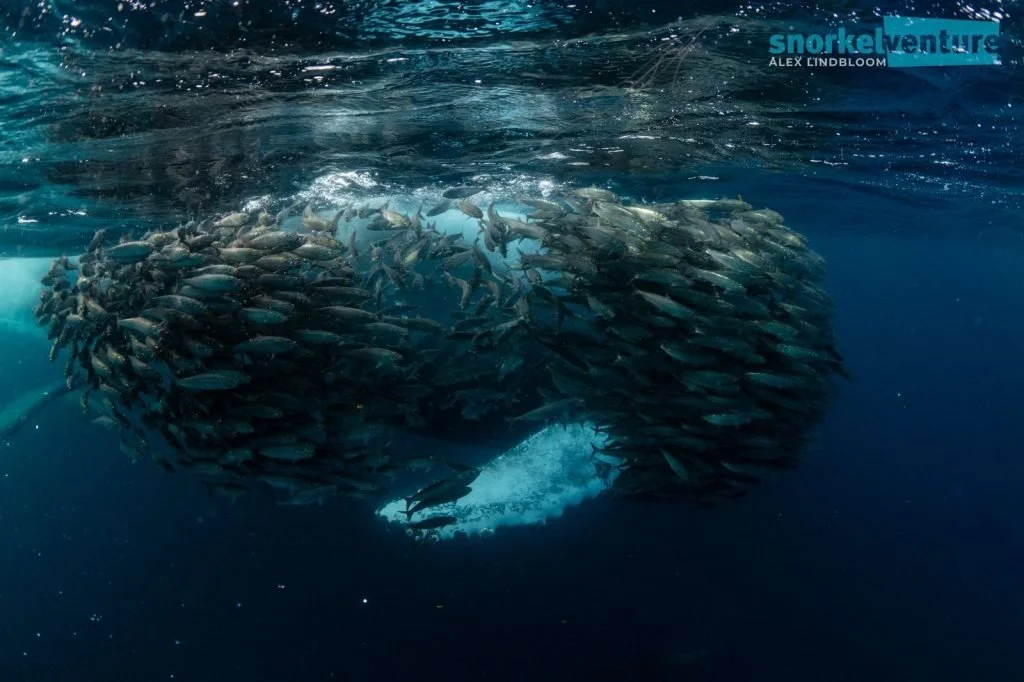
In 1966 the world came together to protect the humpback whales. Thanks to this decision, on coastlines all around the world people can now look out to sea and see humpback whales jumping for joy. Their recovery is a powerful example of how global protection and coordinated conservation can bring a species back from the brink.
Currently humpback whales face another threat. Their vitally important food source of krill in Antarctica is disappearing. Commercial fishing is depleting the Southern Ocean of its krill. Krill is used in pharmaceuticals as a dietary supplement and as food in aquariums. Even though the biomass of krill in the ocean is the largest single-species wild animal biomass on Earth, we are still harvesting it too fast for stocks to remain stable. We can take this opportunity to once again ban together for the protection of humpbacks. If you would like to learn more about Antarctic krill stocks and how you can help protect the humpbacks’ food source, click here.
Snorkeling with Humpbacks
If all this humpback whale talk has you dreaming of slipping into the water beside one, you’re in luck. Snorkeling with these ocean giants is now possible in several countries around the world. In fact, Snorkel Venture hosted a trip to the Dominican Republic last year, where guests experienced unforgettable encounters with mothers and calves. Other destinations for swimming with humpbacks include French Polynesia, Tonga, and Western Australia.
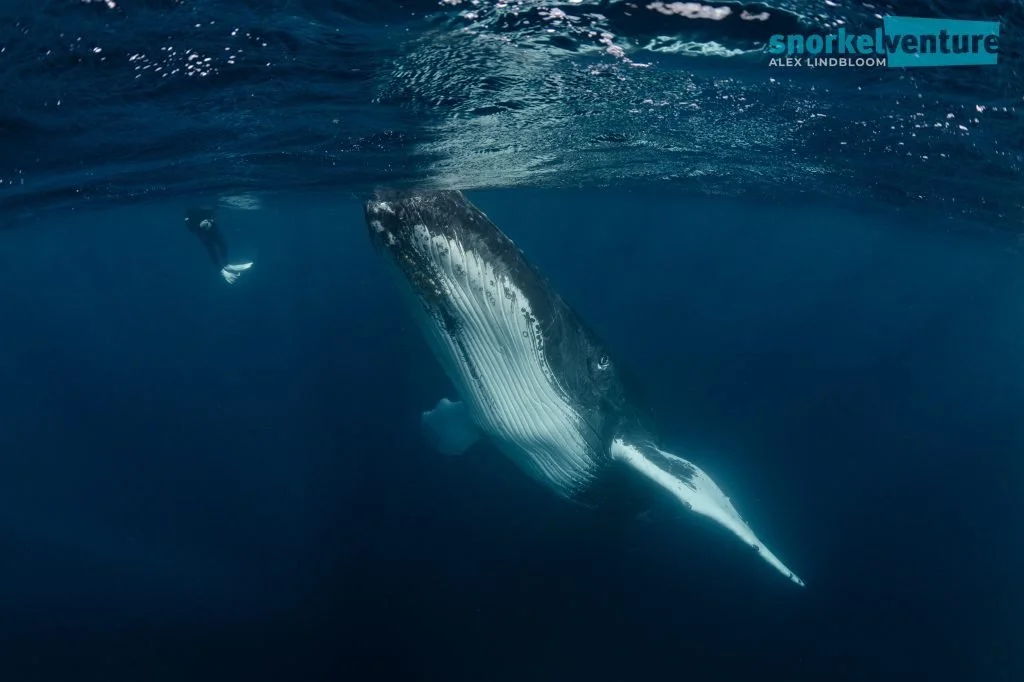
Top tip: Let the whales approach you. The calmer and more relaxed you are in the water, the more comfortable and curious these sensitive animals become, resulting in a magical encounter.
